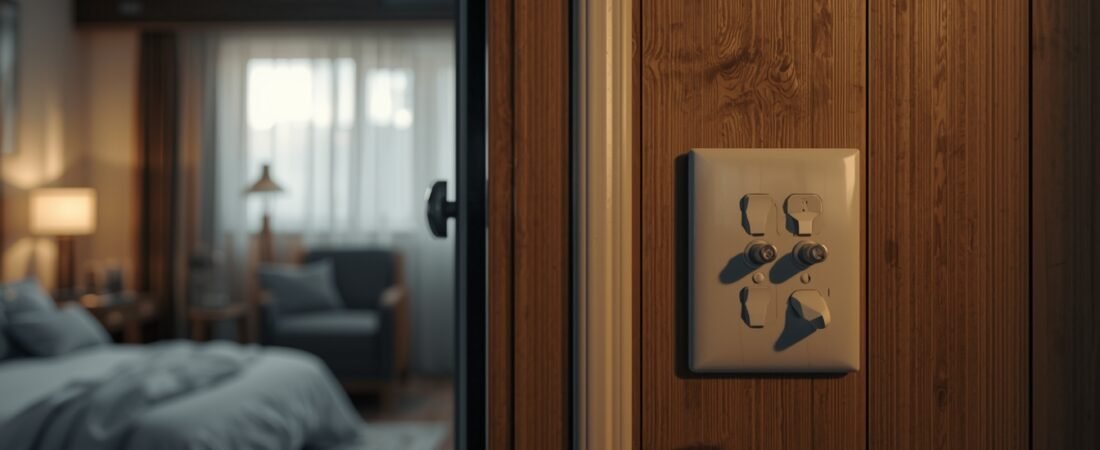
Discussions about household safety sometimes focus on dramatic situations or urgent warnings. In reality, most homes remain safe and comfortable places for everyday living.
Maintaining safety often involves simple awareness of household systems and spaces rather than constant concern. Understanding how safety works in everyday environments can help homeowners approach the topic calmly.
Everyday Safety in the Home
Many safety features are already built into modern homes. Electrical systems, structural components, and fixtures are designed to operate reliably with repeated use.
Examples of everyday safety features include:
- Secure electrical outlets and switches
- Stable flooring surfaces
- Door hardware designed for frequent movement
- Safety devices such as smoke alarms
These systems usually function quietly in the background.
For a broader explanation of maintaining safe living environments, see Home Safety and Practical Care: Maintaining Safe Living Environments.
Awareness Instead of Alarm
A practical approach to safety focuses on awareness rather than worry. As people move through their home each day, they naturally interact with fixtures, surfaces, and appliances.
These interactions help homeowners become familiar with how their environment normally behaves.
For example, individuals may notice:
- How a door usually closes
- The typical feel of a light switch
- The sound of appliances during operation
When something behaves differently, that awareness helps it stand out.
Recognising Normal Household Changes
Homes gradually change over time as materials respond to regular use. Hardware may loosen slightly, surfaces may show small signs of wear, and fixtures may feel different after many years.
These changes are normal and rarely indicate immediate danger.
Understanding this helps homeowners maintain perspective when small differences appear.
Responding Calmly to Small Changes
If something in the home feels different, homeowners often respond naturally during routine activities.
Examples may include:
- Tightening a loose handle
- Adjusting a door latch
- Replacing a small household component
These simple responses help maintain household systems without creating unnecessary concern.
Safety as Part of Daily Living
Household safety is often supported through everyday routines. Cleaning, organising, and regular use of the home naturally bring attention to many fixtures and surfaces.
As people interact with these systems, they remain familiar with how their home functions.
This familiarity helps maintain awareness without requiring complex safety procedures.
A Balanced Perspective on Home Safety
Maintaining safety without alarm means understanding that homes are designed to support everyday living. Small changes and gradual wear are normal parts of that environment.
By approaching household safety calmly and remaining aware of how systems function, homeowners can maintain a comfortable and practical living space.