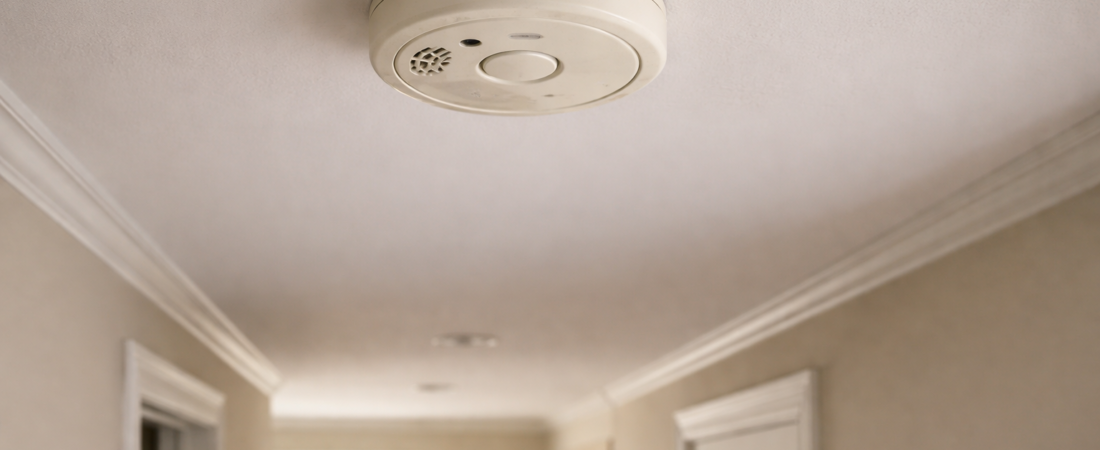
Smoke alarms are designed to protect quietly in the background. Because they rarely draw attention to themselves, it is easy to forget that they have a limited working life.
Many households continue using smoke alarms long after their recommended service period. The question is not whether they still “beep” when tested, but whether they can still detect smoke reliably when it matters.
Why Smoke Alarms Age Over Time
Inside every smoke alarm is a sensing component that responds to airborne particles. Over years of use, this sensor gradually becomes less sensitive.
Dust, humidity, airborne oils, and small insects can affect the internal chamber. Even in clean homes, normal environmental exposure slowly reduces accuracy.
Electronic components also degrade. The device may still produce a sound during a button test, but the detection mechanism itself may no longer respond as quickly as it once did.
Ageing is gradual and usually invisible.
The Risk of Keeping an Old Smoke Alarm
An ageing smoke alarm does not usually fail suddenly. Instead, it may respond more slowly, require denser smoke before activating, or trigger inconsistently.
This delay can reduce the early warning time that smoke alarms are designed to provide.
If a smoke alarm is more than 10 years old, most safety authorities consider it beyond its reliable service life, regardless of battery condition.
Replacing an ageing unit restores the intended sensitivity and response time.
How to Check the Age of a Smoke Alarm
Most smoke alarms have a manufacture date printed on the back of the unit. This is different from the battery installation date.
If the manufacture date is 10 years ago or more, replacement is generally recommended.
If no date can be found, or the unit’s age is uncertain, replacing it is often the safer option.
Signs an Older Smoke Alarm May Need Replacement
While age alone is enough reason to replace a unit, certain signs can also indicate decline:
-
Frequent false alarms without clear cause
-
Chirping that continues after battery replacement
-
Failure to respond during routine testing
-
Discolouration or brittle plastic casing
These signs suggest the device may not be functioning as intended.
Replacing Smoke Alarms as Part of Planned Maintenance
Smoke alarms are not permanent fixtures. They are time-limited safety devices.
Including them in a structured household replacement plan helps prevent reliance on ageing equipment. Replacing smoke alarms at the end of their service life is a routine safety measure rather than a response to failure.
For a broader overview of how to approach ageing household components, see Replacement Timing in the Home: Knowing When Things Reach End of Life.