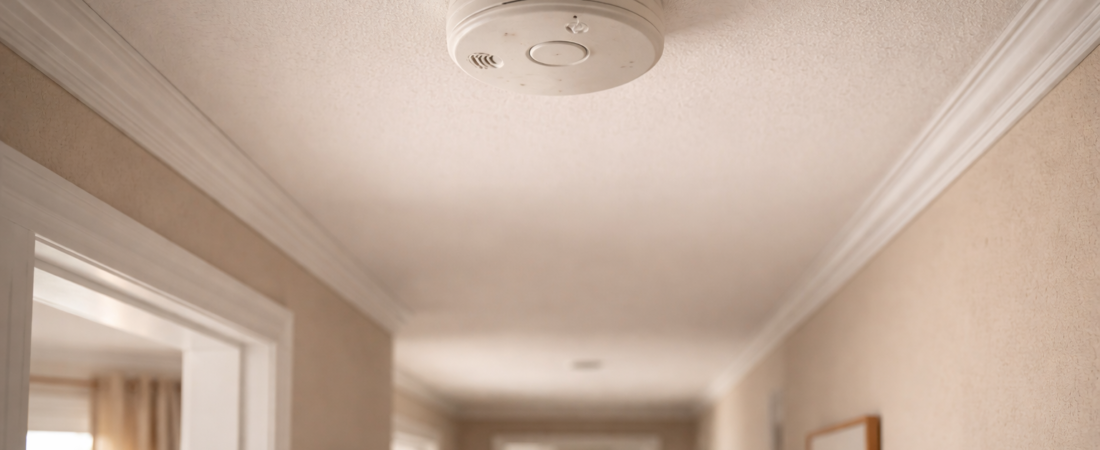
How Long Should Smoke Alarms Last?
Smoke alarms are small devices, but they operate continuously.
Even when silent, they are monitoring the air for changes. Like all household systems, they have a defined service life.
Understanding how long smoke alarms typically last helps avoid relying on a unit that has quietly aged beyond its reliable range.
Typical Service Life of a Smoke Alarm
Most residential smoke alarms are designed to last around 8 to 10 years from the date of manufacture.
This applies to:
Battery-powered units
Hardwired units with battery backup
Sealed 10-year battery models
After this period, the internal sensing components begin to degrade. Even if the alarm still produces sound, its detection reliability may be reduced.
Manufacturers usually print the production date on the back of the unit.
The recommended replacement window is typically based on that date, not the installation date.
Understanding the broader principles of replacement timing in the home helps place smoke alarm replacement within normal lifecycle planning rather than reactive decision-making.
Why Smoke Alarms Have a Limited Lifespan
Inside a smoke alarm is a sensing chamber.
Over time:
Dust can accumulate
Electronic components can age
Sensitivity can drift
Internal corrosion can occur at a microscopic level
These changes are gradual and not visible from the outside.
Because smoke alarms are safety devices, they are designed with a conservative service life.
Battery Life Is Not the Same as Device Life
Replacing batteries does not extend the lifespan of the alarm itself.
A new battery ensures the alarm has power. It does not restore the sensing mechanism.
A smoke alarm that is more than 10 years old should be replaced even if:
It still sounds during testing
The battery is new
It appears physically intact
Power and detection are separate systems.
Signs a Smoke Alarm May Need Replacement
Replacement becomes reasonable when:
The unit is 8–10 years old
It chirps intermittently despite new batteries
The test function is inconsistent
It has been exposed to heavy dust or renovation debris
The manufacturing date exceeds the recommended lifespan
Most modern alarms will begin periodic end-of-life chirping when they reach their designed limit.
This signal indicates replacement, not repair.
Where to Find the Manufacture Date
Remove the unit from its mounting bracket.
On the back, there is usually:
A printed date
A stamped month and year
Or a small label indicating production details
If the date is unreadable or missing, replacement is usually the simplest decision.
Coordinating Replacement Across the Home
Homes often contain multiple smoke alarms installed at the same time.
If they were installed together, they will likely reach end of life together.
Replacing them at the same time:
Keeps system age consistent
Reduces future tracking
Simplifies record keeping
Some homeowners note the replacement year inside a cupboard or household maintenance log.
Replacement Is Routine, Not Reactive
Smoke alarms do not typically fail dramatically.
They age quietly.
Replacing them within their intended lifespan is part of normal household upkeep, similar to replacing filters or flexible hoses.
Understanding this timing avoids uncertainty and ensures the system remains dependable.
Smoke alarms are one example of how steady systems thinking, including preventive maintenance in the home, reduces uncertainty over time.