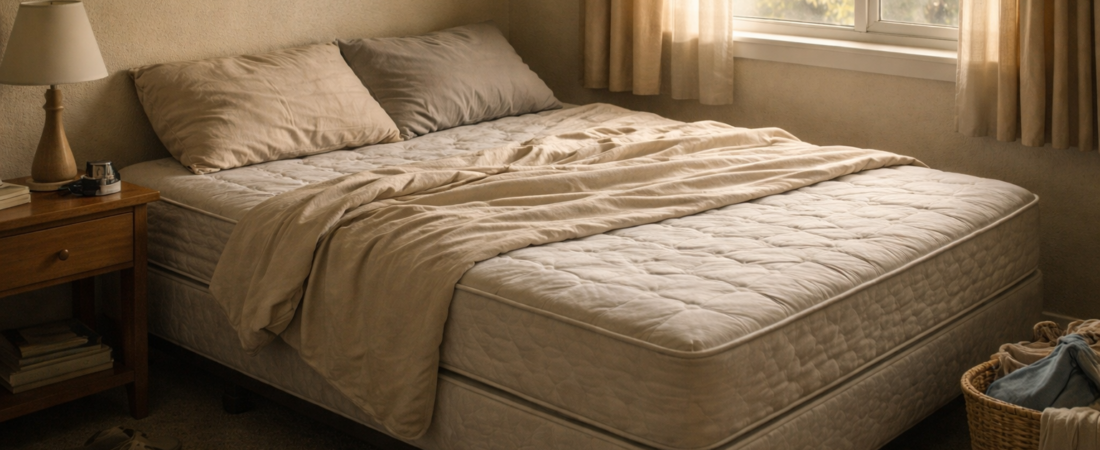
Mattresses are one of the most frequently used items in the home. Unlike many household systems, they operate quietly in the background and gradually change over time without obvious mechanical signs of wear.
Because the changes are slow and often subtle, many people continue using a mattress long after it has begun to lose its original support and comfort.
Understanding the typical lifespan of a mattress and the signs that it is nearing the end of its useful life can help households make more informed replacement decisions.
This article supports the broader guide Replacement Timing in the Home: Knowing When Things Reach End of Life, which explains how different household items naturally move through aging and replacement cycles.
The Typical Mattress Lifespan
Most mattresses last between 7 and 10 years, although the exact lifespan depends on several factors including construction, materials, and how frequently the mattress is used.
Common mattress types have slightly different longevity patterns:
-
Innerspring mattresses often last around 7–8 years
-
Memory foam mattresses commonly last 8–10 years
-
Hybrid mattresses may last 8–10 years or slightly longer
-
Latex mattresses sometimes remain usable for more than 10 years
These ranges are general expectations rather than fixed rules. Actual lifespan varies depending on how the mattress is supported and how evenly the weight load is distributed over time.
Gradual Loss of Support
One of the earliest signs of mattress aging is a gradual reduction in support.
Foam layers and internal springs slowly compress with repeated use. Over time, the mattress may feel softer or less stable than when it was new.
Because the change occurs slowly, many people adjust to the difference without immediately recognizing that the mattress has changed.
Visible Sagging or Body Impressions
As internal materials compress, the mattress surface may begin to develop visible indentations.
These are often seen in the areas where a person typically sleeps. Over time, the mattress may show:
-
Permanent body impressions
-
Slight dips or sagging areas
-
Uneven surface contours
While mild impressions are common with normal use, deeper sagging may indicate that the internal structure is losing its ability to distribute weight evenly.
Changes in Comfort or Sleep Quality
Another common indicator that a mattress may be approaching the end of its lifespan is a change in overall comfort.
Some people notice that:
-
The mattress feels less supportive
-
The sleeping surface feels uneven
-
Comfort improves when sleeping elsewhere
These changes often reflect gradual material fatigue within the mattress layers rather than a visible defect.
Increased Noise or Movement Transfer
Older spring mattresses may begin to produce creaking or squeaking sounds as the internal springs age.
Similarly, some mattresses may begin to transfer movement more easily across the surface, which can occur when internal components lose their original tension or support.
These changes do not always mean immediate replacement is required, but they can indicate that the mattress structure is gradually weakening.
Hygiene and Material Aging
Over time, mattresses also experience normal material aging. Fabric covers, foam layers, and internal materials slowly accumulate wear from daily use.
Even with protective covers and routine cleaning, the materials themselves continue to age and compress.
This gradual aging contributes to the typical replacement cycle that most mattresses eventually reach.
Replacement Timing Is Usually Gradual
Like many household items, mattresses rarely reach the end of their useful life suddenly. Instead, they typically pass through a long period where comfort slowly changes and support gradually declines.
Because the change is slow, households often keep using the mattress until the differences become more noticeable.
Recognizing the typical lifespan range and common aging signs can make it easier to plan for replacement before comfort and support decline significantly.