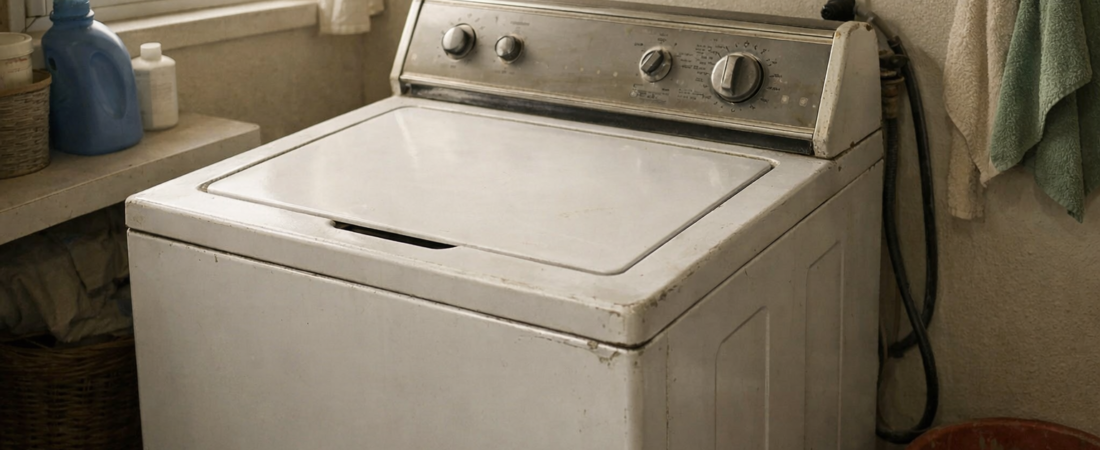
Washing machines are built to operate for many years, but they are still mechanical systems that gradually wear over time. Motors, pumps, seals, and suspension components all experience repeated stress with every wash cycle.
Most washing machines continue to work long after their performance has started to decline. Because of this, many households adapt to small changes in performance rather than recognizing them as signals that the appliance may be nearing the end of its useful life.
Understanding the typical signs of aging can help homeowners make more informed decisions about whether continued maintenance makes sense or whether replacement is becoming the more practical option.
This article supports the broader guide Replacement Timing in the Home: Knowing When Things Reach End of Life, which explains how household systems and appliances gradually reach the point where replacement becomes more practical than repair.
The Machine Is More Than 10–12 Years Old
A washing machine that has been in regular use for more than a decade has already completed thousands of wash cycles. Over time, internal components such as the motor bearings, pump, and suspension system experience gradual wear.
Many machines will continue to operate beyond this age range, but reliability often becomes less predictable. Breakdowns may become more frequent, and replacement parts may be harder to source depending on the model.
Age alone does not always mean replacement is necessary, but it does place the appliance into a stage where failures become more common.
Frequent or Repeated Repairs
Occasional repairs are a normal part of maintaining household appliances. However, when repair needs begin appearing repeatedly within a short period, it may indicate broader wear across multiple components.
Examples of recurring repairs may include:
-
Replacing pumps or drain components
-
Door lock or latch issues
-
Control board faults
-
Suspension or balance problems
At this stage, each additional repair may extend the machine’s life only temporarily. When several components begin wearing out around the same time, replacement often becomes the more practical long-term option.
Excessive Noise or Vibration During Cycles
Washing machines naturally produce some noise during spin cycles, but noticeable changes in sound or vibration patterns can indicate internal wear.
Examples may include:
-
Loud knocking during spin cycles
-
Increased vibration even when loads are balanced
-
Grinding or rumbling sounds from the drum area
-
The machine shifting position during operation
These changes are often associated with worn drum bearings, suspension springs, or internal supports. While some issues can be repaired, they can also signal that major internal components are reaching the end of their service life.
Water Leaks Around the Appliance
Small water leaks may develop slowly as hoses, seals, or internal gaskets age.
Possible sources of leaks include:
-
Door seal wear on front-load machines
-
Drain hose connections
-
Internal pump seals
-
Tub or drum seal deterioration
Minor leaks can sometimes be resolved with a simple seal or hose replacement. However, leaks connected to internal tub seals or structural components may involve more extensive repairs, which can influence the replacement decision.
Washing Performance Declines
A common sign of aging appliances is a gradual decline in performance rather than a sudden failure.
Changes in washing performance may include:
-
Clothes not coming out as clean as before
-
Spin cycles leaving clothes excessively wet
-
Longer wash cycles or incomplete cycles
-
Water not draining properly
These symptoms may result from worn pumps, sensors, or internal control systems that no longer operate as efficiently as when the machine was new.
When several of these performance changes appear together, it often indicates broader wear across multiple systems.
Rust or Structural Deterioration
Visible rust or deterioration on the appliance body can indicate that moisture has been affecting the machine for some time.
Common locations include:
-
Around the lid or door frame
-
Along the base of the cabinet
-
Near detergent drawers or water inlets
Surface rust may remain cosmetic, but structural deterioration near the drum housing or internal frame can affect the machine’s stability and safety during high-speed spin cycles.
The Cost of Repair Is Close to Replacement
One of the most practical indicators that replacement may be approaching is the cost comparison between repair and replacement.
When a repair approaches a large portion of the cost of a new machine, many households choose replacement instead. This is especially true if the appliance is already approaching the typical end of its service life.
The decision is often less about a single repair and more about the likelihood of additional repairs appearing soon after.
Replacement Timing Often Becomes Gradual
Household appliances rarely stop working without warning. Instead, they usually move through a gradual period where small issues begin to accumulate.
During this stage, homeowners may notice small inconveniences such as increased noise, longer cycles, or occasional repair needs. Over time, these signals often combine to suggest that the machine is reaching the end of its reliable service period.
Understanding these signs can help households plan replacements before an unexpected failure occurs.