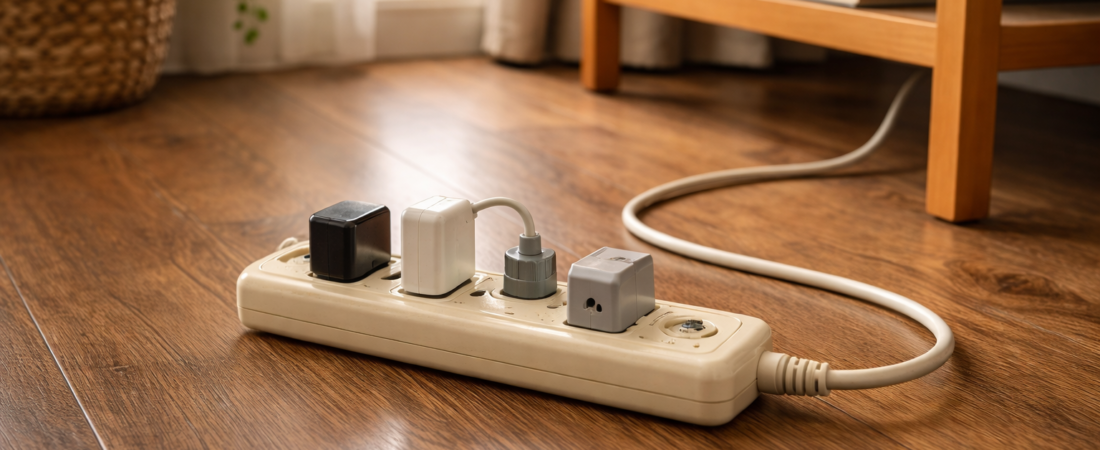
Power boards are often treated as permanent fixtures in a home. They sit behind desks, beside televisions, or under beds for years without much thought.
Over time, however, internal components can wear down. Even if the outside looks acceptable, the internal protection mechanisms may no longer function as intended.
Understanding when a power board has reached the end of its service life helps reduce unnecessary electrical risk.
It Is More Than Five Years Old
Most standard household power boards are not designed for decades of use. Internal surge protection components gradually degrade, especially after minor electrical spikes.
If a power board is more than five years old and has been in regular use, replacement is often reasonable even if no obvious faults are visible.
This is particularly true if it has protected sensitive electronics such as computers or televisions.
The Cord Shows Stiffness or Discolouration
Flexible cords naturally age.
If the insulation feels unusually stiff, brittle, or slightly discoloured near the plug or entry point, this may indicate heat exposure over time.
Any visible cracking or flattening along the cord is a clear sign the board should be retired rather than repaired.
Plugs No Longer Fit Firmly
A power board should hold plugs securely.
If plugs feel loose, slide partially out, or wobble during use, the internal socket contacts may be worn. Loose connections can generate small amounts of heat over time.
When outlets no longer grip properly, replacement is typically safer than continued use.
The Housing Feels Warped or Slightly Distorted
Subtle warping of the plastic casing can occur after years of warmth or minor overloads.
Even without visible melting or burning, distortion may indicate that the internal components have experienced repeated thermal stress.
A board that no longer sits flat or appears slightly bowed should be replaced.
The Reset or Surge Indicator No Longer Functions
Some boards include a reset switch or surge protection light.
If an indicator light no longer illuminates, or the reset switch feels unreliable, the protective mechanism may no longer be active.
At that point, the board may still distribute power but without surge protection.
It Has Experienced a Significant Surge Event
After a lightning storm or known electrical surge, even if devices continue working normally, internal surge components may have sacrificed themselves.
Because this damage is not always visible, replacement following a significant event is often a precautionary step.
You Notice Intermittent Power Interruptions
If connected devices briefly lose power when the board is gently moved or when plugs are adjusted, internal connections may be loose.
Intermittent supply should not be ignored. A stable power delivery system is expected in normal household conditions.
Quiet Replacement Is Part of Routine Maintenance
Power boards are inexpensive and widely available. Replacing them periodically is a low-effort maintenance action that supports overall electrical safety.
For broader guidance on recognising end-of-life patterns in common household systems, see
Replacement Timing in the Home: Knowing When Things Reach End of Life.