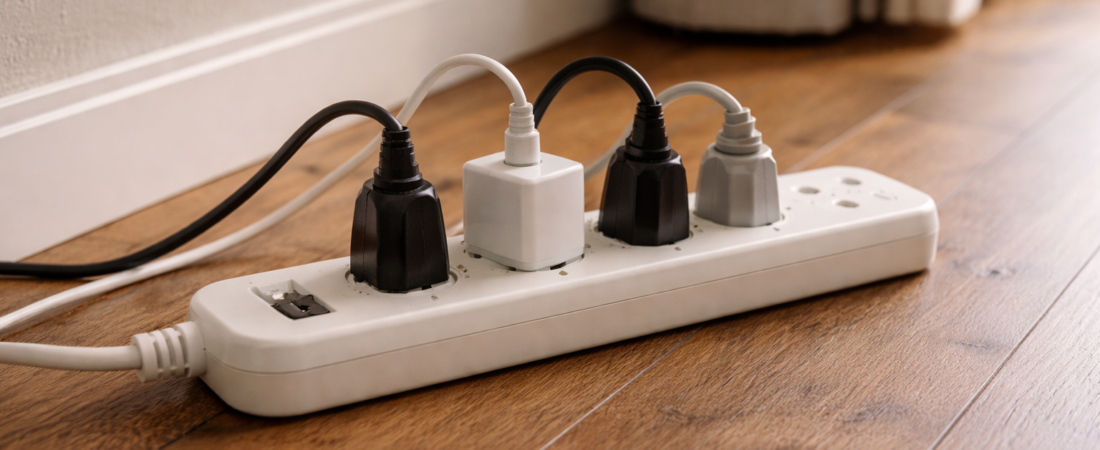
Power boards and surge protectors are common in most homes. They sit quietly behind desks, televisions, and appliances, often remaining in place for many years.
Because they usually continue supplying power, it can be easy to assume they do not need replacement. However, these devices have a limited service life, particularly when surge protection is involved.
The Difference Between a Power Board and a Surge Protector
A basic power board simply distributes electricity from one outlet to several sockets. It does not protect connected devices from voltage spikes.
A surge protector includes internal components designed to absorb or redirect excess voltage. These components protect electronics from damage during power surges caused by storms, grid fluctuations, or internal wiring events.
While a standard power board can last many years if undamaged, surge protectors gradually lose their protective ability over time.
Why Surge Protectors Wear Out
Surge protectors contain small components that absorb excess voltage. Each time a power surge occurs, a portion of their protective capacity is used.
Over time, repeated minor surges slowly reduce the device’s ability to provide protection. This wear is not visible from the outside.
In many cases, a surge protector may continue supplying electricity normally even after its protective function has declined.
Typical Service Life
Most surge protectors are designed to last between three and five years under normal household conditions. In areas with frequent electrical storms or unstable supply, the lifespan may be shorter.
Basic power boards without surge protection can last longer, provided there is no overheating, physical damage, or loose wiring.
Age alone is not always the deciding factor, but older devices should be checked carefully.
Signs a Power Board or Surge Protector May Need Replacement
Certain signs suggest replacement may be appropriate:
-
Cracked or brittle casing
-
Loose or discoloured sockets
-
Warmth during normal use
-
Flickering power to connected devices
-
A surge protection indicator light that no longer works
Any smell of burning or visible damage requires immediate replacement.
Including Power Boards in Replacement Planning
Power boards and surge protectors are often overlooked in household maintenance plans.
Adding them to a periodic review schedule helps reduce reliance on ageing electrical accessories. Replacing older surge protectors ensures connected electronics remain protected as intended.
For a broader approach to identifying ageing household components before failure occurs, see Replacement Timing in the Home: Knowing When Things Reach End of Life.